Sunday, March 5, 2017

A Weekend in Tuscany

San Gimignano behind me

If your mental image of Tuscany is one filled with rolling hills, picturesque neutral colored homes, and countryside towns filled with vineyards, you would have a pretty accurate picture of what I explored this weekend. A few weeks ago I was feeling pretty confident and decided to book a little weekend excursion with me myself and I, and my taste of traveling solo was both encouraging and instructive in terms of my resilience and ability to handle travelling around without any familiar faces. However, in a couple of weeks I will trek out on a spring break trip mostly solo (seeing a few friends along the way) and I hope to reflect more on solo travel after that. So, for now, here's a glimpse into the beautiful region of Tuscany!


I set out late Thursday evening for Florence and by the time I arrived at my hostel around 11:30, I was exhausted and crashed to store up on sleep for the weekend. During the day Friday I took a winery/ Tuscan village tour (as opposed to exploring on my own) because it would be hard to see a lot of the countryside in a short amount of time without my own car. It was a full day excursion, but our group was really small and made for a more personal and enjoyable day. Our first stop was at a winery called Torciano about an hour outside Florence. Here we tried a collection of wines and olive oils, along with some snacks/ local meat and cheese. Like I noted last semester in Argentina, I'm by no means any type of wine connoisseur. However, I can tell you that every single wine we tasted was lovely and if I was traveling with more than my school backpack I would have left with a couple of my favorites.

We tried each one...

Snacks!

Next we drove to a small, locally run winery just outside the town of San Gimignano which we visited shortly after. I liked this winery a lot in general because it was smaller and had a more personal feel, and we were even given a small tour of their vineyards/ facilities. I also got to pet their dog and horses so even before we tried the wine I was happy (clearly it doesn't take a lot). We tried a selection of 3 wines here, a white, a rosé, and a red and while all were great the white was my favorite because it wasn't as sweet as other white wines I had tried and was more refreshing. This was also accompanied by some bruschetta and tomatoes, a delicious Italian treat.

San Gimignano in the distance

Picturesque horse

Family's production site on their property

Lovely views

More wine

After the second winery we made our way to San Gimignano, a small medieval town up on a large hill. The historic part of the town was small, even smaller than Orvieto, but we only had an hour and a half to wander anyway. I made my way to some great view points as well as into a few local artisan shops where I had the opportunity to practice some Italian (more than just "Ciao, un cappuccino per favore"). The more I try to speak the language the more I realize I don't know, however so many people are nice and patient with me as I practice and I appreciate them so incredibly much for that, since in Rome most people reply to me right away with English. So I'm learning, slowly.

Outer wall

Wandering the city

Main square

Views from the outer walls

San Gimignano is also known for a gelato shop that has won awards the last several years running distinguishing it as "the best gelato in the world". I'm unsure who has the job of deciding that, but I would like to apply. Anyway, I tried the praline (at the suggestion of the owner) and the chocolate (because I'll never say no to chocolate) and they were both so yummy. Italy's food and wine are slowly ruining me, as I know I'll have a much more difficult time finding food this good and fresh for these prices back home, but I won't think about that until May.


We arrived back to Florence around 4:30 or so in the afternoon which was perfect since it gave me a couple hours before dark to explore. As you can imagine, Florence is stunning and I spent my time seeing the impressive Duomo and wandering along the streets/ river and taking in the sights before a relaxing pizza dinner and some down time. I'm coming back to Florence later in the semester, so I felt content just taking in the sights and enjoying my time there.

Main Duomo

So intricate and beautiful

The streets of Florence

On the river

Sunset in Florence

Saturday I got up early and wandered around Florence's local market for a little while (so much authentic leather - I left with some beautiful burgundy gloves that make me feel sophisticated and European) but left pretty early for the train station where I made the hour and a half trek to a little town called Siena.

Florence market

If you look closely you can find San Gimignano

Siena is another one of these medieval brick towns situated up on a big hill (a series of at least 10 escalators takes you up from the train station). I didn't go to Siena with any real plan except to wander around, since it worked out so well for us in Orvieto. This would have worked out well in Siena too had it not been 1) pouring rain all afternoon and evening and 2) the weekend of a huge international bike race that had most of the streets either blocked or reduced to narrow side passages. It was actually really cool because I got to see the end of the women's race Saturday afternoon in the main square and I'd never seen a bike race in person before. However, it was pouring rain for most of this time so I walked around and explored the town and its sights as much as I could take in before eventually heading back to the warm confines of my hostel right outside town.

Outer wall

Approaching the main square

Rainy afternoon in the main square

Duomo

Views outside the city

How I spent most of my time in Siena

**A note on these small medieval towns: as I've now been fortunate enough to explore 3 (Orvieto, San Gimignano, and Siena), I feel it is important to note that while these towns are historic and used to be the center of daily life, now they mostly serve the tourists like myself who come to visit. The majority of people living in these places now reside at the base of these hill towns, and that's where most of the day-to-day life happens. Don't get me wrong, a lot of people make their living working up on top of the hills, but I wanted to keep it in perspective and make it clear that I am seeing a very particular side of Italy catered specifically at people like me who come to visit. That being said, they are still historical landmarks and certainly worth anyone's visit (really, they are lovely!) and I have only seen 3 of these towns and spent short periods of time at each (so how much can I really say?). I just want to point out some trends I've noticed, as well as to acknowledge that it's so incredibly difficult to get a local feel or experience living somewhere like Italy that's so touristy while also traveling often and without speaking the language. But enough rambling about my own biases.

As the rain seemed to have no end, I spent most of the late afternoon and evening curled up on a couch in the common room of my hostel by a nice big window reading, journaling, and talking to some people. This was actually some much needed downtime and really just a nice way to chill out for awhile (this abroad life is pretty tough, you know?) So while I don't really have any wild stories from Siena, it was so nice to have some time just to me and the opportunity to meet some new people as well.

Sunday mornin' rain was fallin'...

Since there is no direct train from Siena to Rome, Sunday morning I took a bus back "home" through more of Italy's beautiful countryside ( I wanted to get back to Rome a little early since, contrary to popular belief, I am in school and do have work to do - midterms start this week).

So, though I want to reflect on solo travel more after my spring break travels, this short little weekend excursion reassured me that I am definitely doing the right thing by wanting to get a little travel experience on my own and I'm so happy with how this weekend turned out!

Smiles from San Gimignano

Monday, February 27, 2017

Carnevale in Venice


The only way to describe Carnevale (and Venice in general) is, simply put, magical.

I planned this trip with my friend Kaitlin before we even arrived in Rome because I'd read and heard many accounts of Venice's Carnevale and the spectacle that it was. Though we took the overnight train both ways and were exhausted when our train pulled back in to Rome at 6:30 am Monday morning before our 9 am classes, we sleepily agreed that the weekend could not have been more perfect.


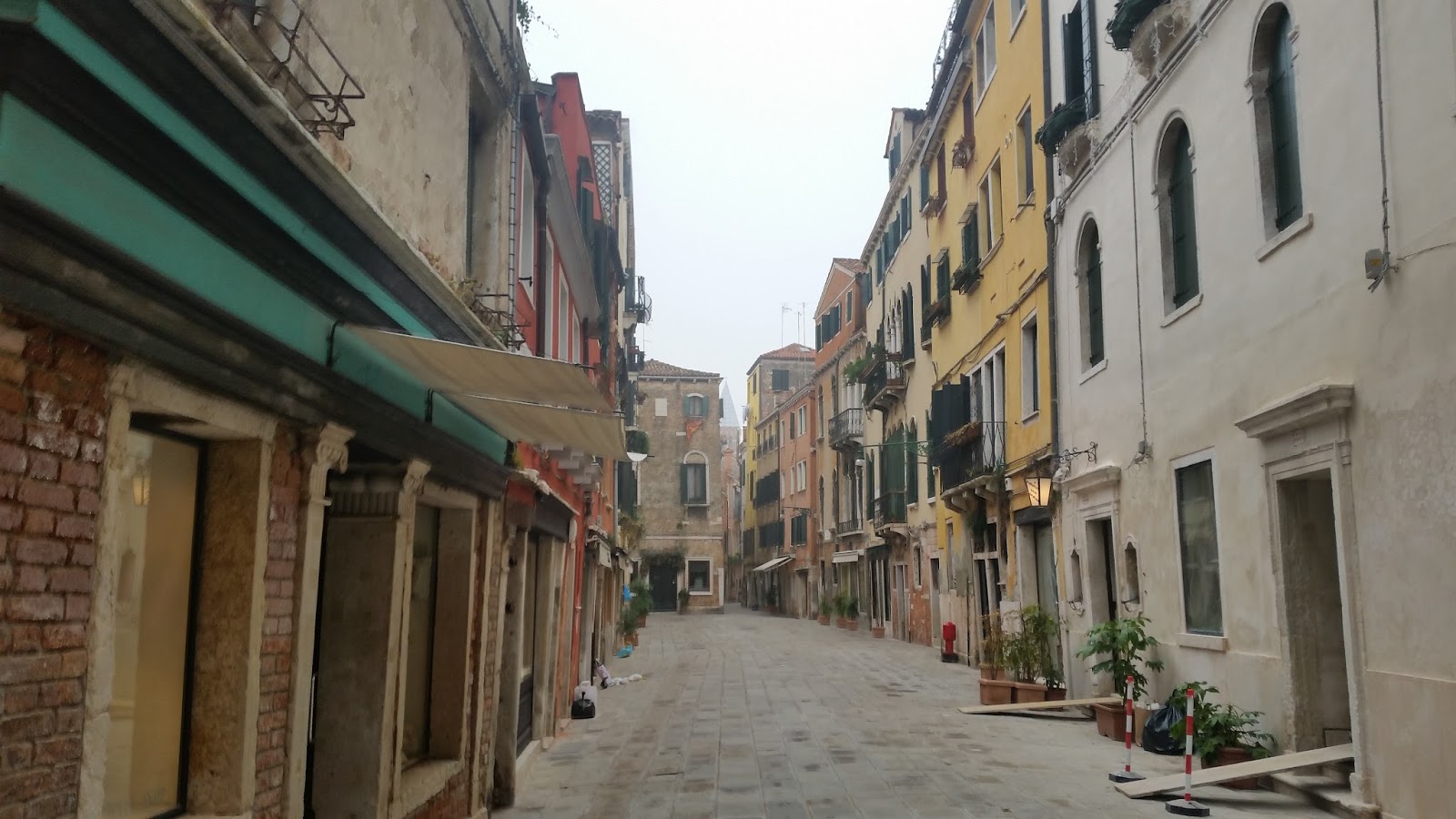
We arrived in Venice around 6 am Friday morning, and as it was still pitch black outside and nothing was open, we meandered our way through the city's winding alleys and put ourselves on the water ready to watch the sun come up. Unfortunately, it was incredibly overcast and foggy so there was no sunrise to see, however it gave Venice and eerie early morning feel as the fog settled over the island.

A quiet Venice morning


Fog over the Grand Canal

We spent most of Friday aimlessly wandering Venice's beautiful streets. Arriving Friday morning gave us an idea of how Venice works on a local level - we saw many families getting ready for school and going about as if it were an entirely normal day, as opposed to the next two days that would fill the small island with a few million (!) people. What struck me most initially was that, aside from the train station, the island of Venice is an entirely pedestrian city - we did not see one car. Everything is transported by boat through Venice's many canals, and even the police use smaller speed boats to get around. The majority of the streets are much too narrow for cars anyway, but it was just an interesting concept to us that the entire island was free of any kind of automobile.

Too small for cars

A fraction of the crowd

Though it's a relatively small island, we had no trouble keeping ourselves occupied simply walking around (even by Sunday we were still stumbling across new sights but also we got lost every 10 minutes and would end up stranded at the edge of a canal). We spent time in several mask shops before finally settling on two lovely handcrafted masks from a local husband and wife who have been in the business together for 30 years. They were warm and welcoming and talked with us for over 30 minutes about their craft and showed us parts of the mask-making process. Talking with them and learning first hand about such an important part of the festival was hands down one of the most fulfilling parts of our weekend.

Not great lighting but the masks we finally chose!

More intricate masks 

Street vendor masks (what most people wore)

In the evenings, we happened to be staying right in Venice's university district making for a lively nightlife scene. The main square near us, Campo Santa Margherita, was full of great shops, restaurants, gelato, and young college students like us. We had a great time getting to know part of Venice's younger culture, and met some really great people during our evenings out.

I'm not going to give an extensive summary of the history surrounding Venice's Carnevale celebrations (look here if you want to know more), but essentially the festival began as a celebration and feast leading up to the start of lent. Masks have been used for centuries in Venice - notably they were used in the Parliament to maintain absolute anonymity during voting - but it was also common place for people to wear their masks through the streets simply because they could. While the Carnevale was stopped for a period of time, it was reinstated in 1979 and has been a world famous celebration ever since.

Kaitlin and I spent basically all day Saturday and Sunday wandering around St. Mark's Square and its surroundings - the center of the festivities and hub of all the costumes. We were lucky enough to see a few parades, costume contests, and shows put on for everyone during the day, and were continuously blown away by the beauty, intricacy, and creativity of the costumes. At first it was slightly perplexing to us why people would put in so much time and effort just to dress up for a couple weeks and have people take pictures of you (with a mask on your face, of course), however as the weekend went on we began to understand the appeal of not only dressing up to appreciate Venice's traditional Carnevale celebrations, but also just the fun of being seen and having people admire your work. Below is a sample of what we encountered over the weekend.


My favorite duo


As you can tell, simply wandering around and admiring the costumes was an event itself. This is without a doubt an experience I will cherish for the rest of my life, and I feel so fortunate that I was able to take part in such a beautiful and unique festival.


Watching the gondolas on our last evening

Tuesday, February 21, 2017

A Saturday in Orvieto

Atop Orvieto's wall

Two of the many lovely things about living in Rome are 1) the ease of travel outside of Rome and 2) the abundance of day trips in close proximity to the city. My friend Kaitlin and I decided to take advantage of this aspect of our study abroad experience and went on a day trip to a beautiful medieval town, Orvieto.


Just over a 1.5 hour train ride from Rome, Orvieto sits atop a large hill surrounded by a massive wall that was used to keep out adversaries throughout the centuries. To reach the historic part of town, you have to take a funicular up the hill (or ride a bus, but the funicular was much more fun). We didn't go with any sort of itinerary, so we got to spend most of the day wandering Orvieto's lovely but confusing streets.

So picturesque


Orvieto is known for its pottery!

Outdoor market

One of the most defining landmarks in the town is the massive Duomo (cathedral) perched on a large open piazza (plaza/square). I was intrigued by the stripes along the side of the Duomo, however the front is the most capturing part of the structure. The intricacy of the carvings and murals combined with the color was truly stunning. We spent awhile just standing in front of it and admiring the artwork.


Fun fact that I didn't know: during World War II, there were locations such as Orvieto, among others, that both the Allies and the Axis powers agreed not to bomb to preserve their cultural and historical history. Orvieto was preserved for its Duomo and underground caves (discussed later). This was just an interesting and sort of "hope for humanity" type of fact, that even in the middle of a war there could be agreements made by both sides to preserve cultural relics.

After wandering around for awhile, we stopped in at a local feeling hole-in-the-wall deli type restaurant. The waiters only spoke Italian which pushed both of us to work with our Italian certainly more than we have to in Rome which was very cool, and we appreciated the fact that the town is trying to preserve its own culture and not cater solely to tourists. We had a lovely meat and cheese plate along with a caprese salad and some local wine. Everything was so tasteful and fresh it was a wonderful meal, and we even sat next to two Italians who were very patient and let us practice more of our Italian with them. It was an all around enjoyable time.

Italian "aperitivi"

Everything so fresh!

We spent the afternoon walking along part of the outer wall of the city, taking in the Italian countryside views. It was a relaxing couple of hours that we just got to spend enjoying the lovely outdoors.

The outer wall


Views from outside Orvieto


In the early evening, we took a tour of Orvieto's underground. Apparently developed starting with the Etruscan civilization around 700 BC, nearly the entire underground of Orvieto is composed of caves. In 700 BC, the Etruscan's used the underground part of the city to work and store food, a process that carried through the middle ages. During this time, the medieval town was so overpopulated that people only lived above ground and all work happened below ground. Now most of the caves are privately owned as they still sit under houses and are used by families for storage.

Tools used to make olive oil


Another fun fact: these pictures with the holes in the wall show old aviaries where the people of Orvieto would keep pigeons for times of famine. Between this and their underground water source, they were able to wait out the Roman army for two years without starving just within their own city walls.


After our underground tour, we wandered around the town a little more and had a couple appetizers before heading back to Rome. It was a lovely day trip, and the perfect Italian medieval town to explore!