Thursday, November 3, 2016

Pichilemu - Travelling with Chileans

Beach trip with soccer team and extended friends

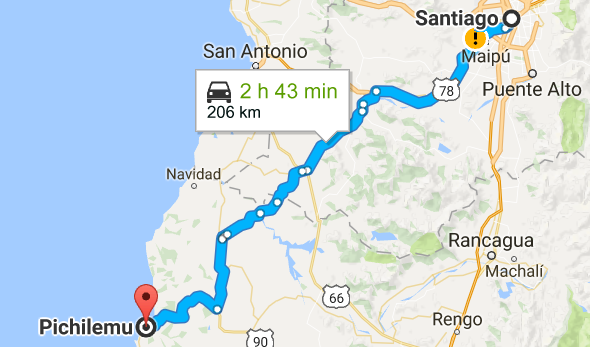
As we seem to have no shortage of long weekends here in Chile (though I promise I do go to school sometimes), this past weekend I was able to travel to a small beach town in central Chile called Pichilemu. My friend Darcy and I were invited by a few of the girls from our Chilean soccer team who take this trip every year around Halloween with a really big group of friends. Because they apparently find us gringos so entertaining (I think we mostly serve just to amuse them, and they do refer to us directly as "los gringos"), they had us bring a couple of other friends from our AU program to make a decent sized travel group. Unfortunately, I really didn't take that many pictures, but the opportunity to travel with Chilean friends as opposed to only people from our program was certainly an experience to remember.


Pichilemu is most well known as an international surf destination; this past weekend while we were there, the small beach town was packed because they were hosting the women's world championship surf competition. You can access the majority of the town on foot, and our hostel was only a 10 minute walk from the beach.

Since almost everyone on the trip had been to Pichilemu before, this was more of a relaxing trip as opposed to a sightseeing/ activities intensive vacation. We got to play a little bit of soccer, some people in the group took surf lessons, and we mostly enjoyed some relaxing time on the beach. In the evenings, the hostel turned into a big social gathering, and in true Chilean style, most people weren't in bed until around 6 am.


Halloween in Pichilemu

We were also able to enjoy some local seafood, known as "ceviche." It's served in almost all of the food trucks close to the ocean, and comes in this little fruit-cup sized container with half a lemon. We also found this incredible waffle truck, and enjoyed warm waffles on a pretty cold morning complete with manjar (a Chilean caramel type spread) and bananas.


The main tourist destination in Pichilemu is a spot called "Punta de lobos" where the waves are enormous - I cannot imagine a more perfect spot for surfing - and are continually crashing against the coast. When we were there it was windy and pretty cold, but packed with people for the competition and those who were simply vacationing for the long weekend.


Overall, it was a relaxing but unique trip. Normally, we get to practice our Spanish all the time outside of school, but this was different because we were literally surrounded by Spanish 24/7. It was easier to talk to my AU friends in Spanish most of the time because it left me with less of a headache than I normally have when trying to switch back and forth between English and Spanish (this happens to all of us - maybe it means we are slowly but surely becoming bilingual??). It was also nice because our Chilean friends made all of the plans we basically just followed along, though this is what usually happens when we hang out with the soccer team anyway. Darcy and I have decided that our motto for this semester is "¿Dónde estamos y qué estamos haciendo?" (Where are we and what are we doing?). This applies to many things here, but really we love it just because it always means a new experience. It's scary to think that I only have about a month and a half left here (where did the time go?), but I have a few more trips and activities planned so stay tuned!

Friday, October 21, 2016

Isla de Pascua (Easter Island)


This past week, I was fortunate enough to travel with my fellow American University classmates to Easter Island, known locally as “Isla de Pascua” or the world’s bellybutton (I’m not joking) for a school-sponsored educational vacation. We learned an unbelievable amount about the local culture, archaeological studies on the island, and most importantly, a lot of history about a civilization that is totally isolated and somewhat mysterious. Here are a few of the highlights:


Easter Island is 2,334 miles away from Santiago, the equivalent of about a 5-6 hour plane ride. The island is isolated, with around 6,000 people living there full time and another 6,000 on average that visit each year for tourism. The island was formed by three separate volcano eruptions that took place millions of years ago, and is still home to dozens of volcanic structures and coasts covered in volcanic rock. There is an ongoing debate about where the first inhabitants originated from, but the most widely accepted theory points to Polynesia. The native islanders are called “Rapa Nui”, the name that they give to the island and also to their language.

Overlooking "Hanga Roa", the only town on the island

Perhaps what the island is most well-known for are its ancient statues called "moai". Used to represent important figures in Rapi Nui society, both male and female moai were created to commend tribal leaders, political figures, religious and spiritual guides, etc. They come in many shapes and sizes, and are scattered throughout the island.

This platform features 15 moai, the largest of its kind on the island

The majority of these moai are underground


During the island's war with Peru in the 19th century, many artifacts were destroyed including the majority of the moai. They were knocked face down as a symbol of disgrace and a loss of honor of the Rapa Nui, most often by the Rapa Nui themselves. This is also when the eyes were taken out of the statues, as they were the most valuable objects and could be sold for exorbitant prices. Only one moai on the island still has eyes, though they were put in later when the statues were being restored.  

Face down moai
Moai with eyes

All of the moai face inward toward the island as a symbol of protection over the Rapa Nui people, however there is one group of 7 moai, known as the 7 explorers, who face outward toward the ocean to symbolize the 7 Rapa Nui people who served as the island's first explorers.


Carving the moai took patience and time, as they were hand designed using a strong obsidian-like stone and took up to several months or even years to complete. The Rapa Nui carved the moai directly out of stone in various volcanic formations, and then transported them to different locations throughout the island. Theories as to how the moai were moved around the island are widely debated, however ideas range from rolling them on wooden trunks to legitimately pushing them in their upright position around the island to help from alien invaders (it’s not that far from Roswell, NM, right?).

Moai were carved out of rocks like these

One of my favorite moments from our trip was our last evening - we sat out by the beach and watched the sun set behind several moai and were later treated to an evening of smog-free stargazing on the beach, a luxury we don’t normally have in Santiago or D.C.


During our expeditions on the island, we were able to visit a couple of natural, inactive volcanic craters that have filled with water. The first was small and serene, and was located right behind where the Rapa Nui carved their moai. The second was located on the coast and was honestly breathtaking, I’d never seen anything like it.

First crater - moai carving site

Second crater - southwest part of the island 


And finally, it wouldn’t be a trip to an island if there wasn’t some time on a beautiful sandy beach, right? There is actually only one little spot on the island where the beach is sand, not rock, and we took full advantage of this by spending an afternoon resting on the sand and enjoying the waves, grateful for the sun and some down time (the vacation life is hard, I know).

Beach at Anakena

Hopefully these pictures give you a glimpse of this last week’s adventure and some of the incredible history and culture that I was able to experience. Though the island is a part of Chile, our time there felt worlds away from our life in Santiago. I have many more stories and experiences from our travels around the island, but I should at least maintain some level of mystery about the Rapa Nui and their culture. If you’re still curious, ask me next time you see me and I'll certainly have a few more stories to share. 

Darcy and me with the 7 Explorers 

Wednesday, October 12, 2016

Wine Weekend ~ Mendoza


Since Chile is starting to become a bit boring (please note the sarcasm here), a couple of friends and I took advantage of our 4 day weekend to travel to Mendoza, Argentina. Known mostly for its wine, Mendoza is home to over 2/3 of Argentina's wine industry; the city and its surrounding communities are home to over 1,000 different vineyards. 


We left early Saturday morning, eager for the bus ride that would take us through the Andes. Though we spent a little over 3 hours in customs at the Argentina - Chile border, the views during the ride more than made up for it. On the Chile side of the border, we saw snow capped peaks (it was snowing at Chilean customs on the way back), while the Argentinian side featured a more arid landscape, filled with an unbelievable variety of colors and landscapes. These pictures are just a small sample of the views we were treated to during our bus trips:


By the time we arrived at our hostel in Mendoza, it was late afternoon. We spent some time exploring the heart of the city, which was really quite charming with several brick roads and many distinct plazas. My favorite was Plaza España thanks to its colorful fountains and tiles, however the city's main square, Plaza Independencia, is home to the Mendoza's artisan market and was also fun to visit.

Fountain in Plaza España

That evening, after enjoying free wine from our hostel (just a Mendoza thing - but many of the hostels within the city offer free wine happy hours), we went to a restaurant called "Fuerza y Fondas" and were treated to one of the best meals I have had during my time abroad. The restaurant gives off a farm-to-table vibe, and the weather was pleasant enough for us to sit outside on their patio. To start, we enjoyed some Argentinian empanadas - smaller than those in Chile but just as rich and delicious. For our main course, we shared this incredible fish plate called "Merluza", complete with roasted vegetables and potatoes. And of course, the meal would not be complete without sampling some of the region's white wine. 


We woke up bright and early Sunday morning for the highlight of our trip - a tour of some of the local wineries in the Mendoza region. For 600 Argentinian pesos (the equivalent of $40 USD), we were given transportation to 3 wineries as well as lunch, and we received tours and tastings at each vineyard.

The first winery we visited is called "Los Toneles", and had been recently remodeled with beautiful wood and stucco features. We tried 3 different wines here, 2 red (tinto) and one white (blanco). **Disclaimer** I'm not going to pretend like I'm all that cultured and sophisticated in my wine palate, however I will say which ones I liked more than others. My favorite at the first winery was their 100% Malbec line, called "22", however I also enjoyed their "Pispi" blend, which combined 5 different types of grapes. Fun fact, it's called Pispi because apparently this word is an "Argentinismo" (much like the Chilenismos - words only used here in Chile) that means a crazy combination of things. So it was fitting. 

Los Toneles

Me, Ariel, and Darcy


The different wines are stored in these pools!

The second winery we visited is called "Familia Cecchin" - it is owned by an Italian family that immigrated to Argentina in the early 1900's - and it was certainly my favorite. Another fun fact, there was an enormous amount of Italian immigration to Argentina at the end of the 19th century, although I couldn't tell you why. Regardless, this winery was unique because it is 100% organic. So, instead of using a fertilizer filled with chemicals in their vineyards, they just use the grass, olive tress, and other plants and animals that inhabit their land. We tried 3 wines here, and my favorite was their white wine called "Moscatel de Alejandría" because it had this sweet, honey-like taste. Yet another fun fact we learned here, pretty much all of the wineries use the wooden barrels that store wine for only 4 harvests because after this they lose their oak aroma and don't add as much quality to the wine.


Organic Vineyard

Picturesque wine tasting

We got to smell the wine in these barrels!

The last vineyard we visited is called "Carinae", and is what is considered a "Boutique Winery" because they produce very few bottles of wine each year. The name Carinae comes from a constellation that only appears during February - March when they harvest their grapes. We tried 4 different wines here, and while they were all good, they were all also pretty strong in taste.


After this tour, we were taken to a pleasant lunch and then back to our hostel where we relaxed for the afternoon before attending a service at Mendoza's Basilica, which is gorgeous. Aside from not understanding everything because the service was (obviously) in Spanish, it was really nice just to go and observe. 


Monday morning, before we had to catch our bus back to Santiago, we went to a massive park (Parque San Martín) right on the edge of Mendoza that contains several restaurants, 2 stadiums, and part of a university's college campus. We walked around the park for awhile, and up a cerro (large hill) to get some great views of the city.

Entrance to Parque San Martín
Views from our short hike
A beautiful park!

Overall, we had  a wonderful and relaxing weekend. It was nice to have a less activity-intensive trip and just take a quick breather, and the views and wine made it all the better! Side-note: Argentinian Spanish is much easier to understand than Chilean Spanish, so we were all a little reassured in our Spanish speaking abilities over the course of the weekend.